


Dry van
The default for palletized, boxed and non-perishable freight. Enclosed and weather-protected, usually loaded at a dock by forklift.
Dry van guidance →Freight brokerage · United States
I'm Jay Rock, a freight broker with UCW Logistics. I arrange dry van, refrigerated, flatbed, box truck and cargo van shipping across the United States.
I also built Freight Command Center — the software I use to organize load details, keep coverage status straight, and send you consistent, professional updates. You never have to log into anything.
I need a freight quote.
Start a quote request →I'm not sure what equipment I need.
Compare the five types →I have a shipping question.
Read the resources →I need a broker who communicates.
See how I work →Equipment
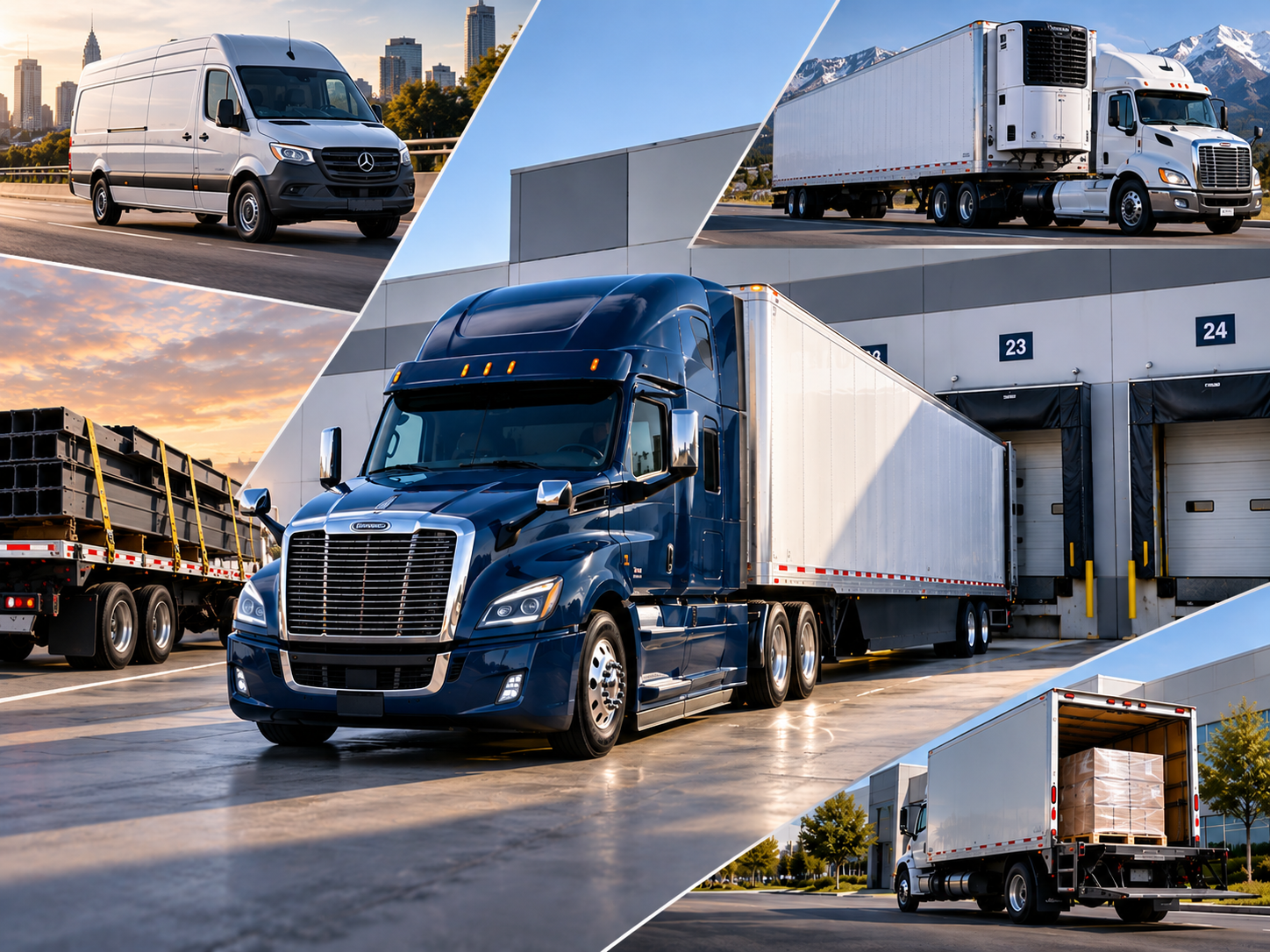
Trailer choice is rarely about preference. It comes down to how your freight loads, whether it needs temperature control, how much it weighs, and what the receiver can handle. Start here, or ask me.
The default for palletized, boxed and non-perishable freight. Enclosed and weather-protected, usually loaded at a dock by forklift.
Dry van guidance →
For freight that has a temperature requirement — fresh, frozen, or protect-from-freeze. The temperature, the setting mode and pre-cooling all need to be agreed up front.
Refrigerated / reefer guidance →
For freight loaded from the side or overhead by crane or forklift, or too large for an enclosed trailer. Securement and weather protection are part of the conversation.
Flatbed guidance →
A single-unit truck for smaller shipments, tight delivery sites, and locations without a dock. Many carry a liftgate; not all do, and usable deck length and door height vary by truck.
Box truck guidance →
For small, urgent or time-sensitive shipments. Floor-loaded through side and rear doors, with much less weight capacity and door clearance than a box truck — they are not interchangeable.
Cargo van guidance →Working together
01
Send what you have — an email, a spreadsheet row, a rate request. If details are missing, I'll tell you exactly which ones matter.
02
We talk through equipment, timing and loading access, and where a different choice would serve the freight better.
03
Load details go out to carriers in a consistent, load-board-ready format, and I work coverage until the load is assigned.
04
You get updates in a predictable format — confirmation, pickup, delivery, paperwork — instead of having to chase me for them.
A quote request is not an instant rate, a confirmed booking, or guaranteed capacity. I reply with a price and any assumptions I had to make.
New to
 UCW Logistics website (opens in a new tab)
?
UCW Logistics website (opens in a new tab)
?
Open your customer account with UCW Logistics. Enter Jay Rock as the person assisting with your account so your setup reaches the right desk.
Your UCW contact Jay Rock
Open an AccountThe FCC advantage
Details get retyped between an email, a load board, a rate confirmation and an update message. Every retype is a chance for a wrong ZIP, a missing appointment window, or a detail that never reaches the driver.
Freight Command Center is the software I built to take that retyping out of my day. You don't use it. You see the result: shipment information that stays consistent everywhere it goes.


Screenshots are from working software with customer and carrier identities, contact details, shipment identifiers, pricing and margins removed or replaced with fictional sample data.
Read the full FCC Advantage pageSee how I work
This is the path a shipment takes on my desk. The software handles the structure and the repetition; the judgment calls stay with me.
01
Shipment emailHowever you write it — pasted text, a forwarded thread, a spreadsheet row.
02
Organized detailsOrigin, stops, dates, equipment, weight and dimensions land in labeled fields.
03
Broker reviewI check what's missing or contradictory and come back to you with real questions.
04
Load-board readyThe load posts in the format carriers expect, with the details they ask for already there.
05
Professional communicationQuote, confirmation and updates go out from templates carrying your load's details.
06
Coverage and follow-upCovered and uncovered loads stay separated, and paperwork gets chased on schedule.
Shipping resources
Equipment reference
Compare typical dimensions, payload ranges and loading access.
Quoting
The eight details a freight broker needs to quote a U.S. truckload shipment — and what to do about the ones you don't have yet.
Temperature-controlled freight
Temperature, operating mode, pre-cooling and the questions to settle with your carrier.

Who you're working with
I started in freight brokerage in 2024, bringing a background in software and application design that goes back to 1993. My work on early online futures-trading platforms taught me how to make complicated, time-sensitive processes clearer and easier to manage.
I built Freight Command Center to bring that same approach to your freight: organized load details, consistent communication, and follow-up that doesn't depend on memory. You work directly with me; the software helps me stay ahead of the details from quote to delivery.
Repeating freight is where organized load information pays off most — the lane details, appointment habits and loading quirks get captured once instead of re-explained every week.
Tell me about your lanesPartial details are fine. If something is missing I'll ask, and if a different trailer would serve the freight better I'll say so before we go any further.
Request a Freight QuoteDirect contact
Jay Rock
Freight Broker ·
UCW Logistics website (opens in a new tab)
Cell 520-394-7400
jrock@ucwlogistics.com
UCW Logistics · Greenville, SC · MC 841454 · USDOT 2444076
FCC is software I developed to streamline freight from quote to delivery, not a UCW Logistics product. I provide freight brokerage services through UCW Logistics.